The oldest directly documented bread is ancient flatbread from Jordan.
Flour - Water - Salt - Time
Sourdough.is ancient history made visible in 2026.
The bread you did not know you needed - until now.
Explore this page You are here: What it is
Simple by nature
It starts with almost nothing.
Sourdough is bread stripped back to its oldest rhythm: flour, water, salt, and time. No commercial yeast. No rush. Just fermentation slowly changing ordinary ingredients into something entirely different.
But wait
One part is alive.
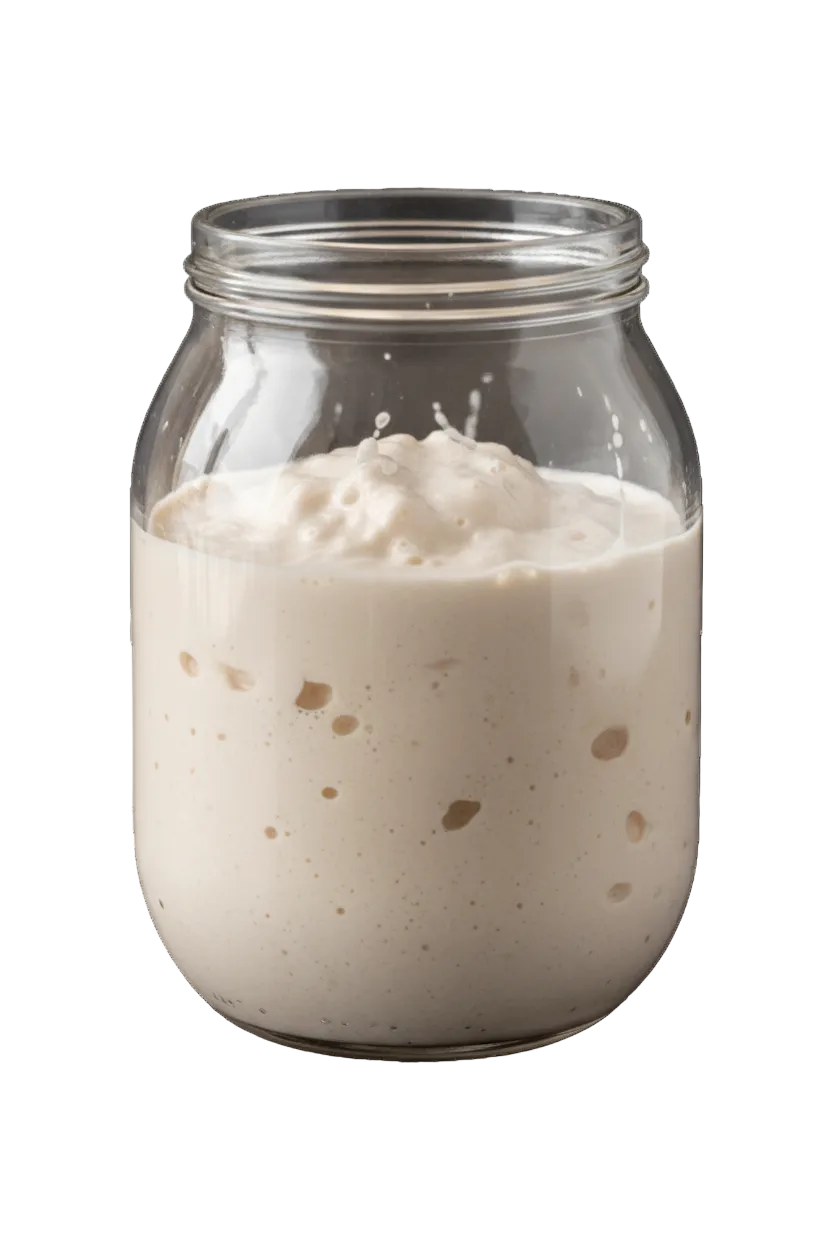
Flour, water, and salt are the foundations. But when Chef Evangalene mixes dough, a fourth working part enters the bowl: active starter.
Cora is flour and water already transformed by a living community of yeasts and bacteria. She does not simply join the recipe. She starts changing it.
Cora.Chef Evangalene's active starter—the fourth working part in the bowl.
A tiny sourdough game
What would you do next?
There is no wrong click—just another way to notice the rhythm. Choose a move and let Cora talk you through the thinking.
Choose a step. Cora is waiting for you.
The old work
Older than the recipe. Still alive in your kitchen.
People were baking bread at least 14,400 years ago. Archaeologists found charred flatbread in Jordan that predates agriculture itself—although the evidence cannot tell us whether it was leavened.
The earliest known records of yeast-risen bread appear in ancient Egypt around 1500–1300 BCE. There is no honest single birthday for sourdough. There is simply a very old human habit: save some living dough, feed it, and carry it forward.
Ancient Egypt gives us the earliest known evidence in the historical record.
Starter turns a very old practice into something you can touch, feed, and share.
History note: these dates describe the evidence—not a made-up “birthday” for sourdough. Read the bread-history review.
“We do not need to invent a birthday for sourdough. We can respect the evidence, then keep the living practice moving in our own kitchens.”
A culture, literally
It is alive. That is not a metaphor.
A sourdough starter is a living microbial ecosystem in flour and water—made up mainly of lactic acid bacteria and yeasts. As they ferment the flour's carbohydrates, the community produces carbon dioxide and organic acids. The gas helps leaven the dough; the acids help shape its flavor, aroma, and behavior.
Feeding is not a cute metaphor either. A baker keeps part of the established starter and gives it fresh flour and water. That carries an active community into the next cycle—and eventually, the next loaf.
A starter is an ecosystem, not a single organism.
Fermentation creates lift and changes flavor, aroma, and dough behavior.
Fresh flour and water give the community new carbohydrates to use.
Part of the established starter seeds the next feeding and the next loaf.
The biology is a living culture. Teaching it, sharing it, and gathering around it is human culture.
Nothing hidden
Four parts enter the bowl.
Flour. Water. Salt. Active starter. The starter begins as flour and water, but fermentation makes it a living working part of the dough.
Flour.
The beginning. The grain that carries everything.
Water.
The movement. The element that wakes the flour.
Salt.
The balance. The smallest ingredient that changes everything.
Starter.
The living culture. Fermentation already in motion.
Meet Cora
Chef Evangalene's living culture.
Cora is the sourdough starter Chef Evangalene cares for at Eat Well ABQ. A maintained portion of her established culture is carried into fresh flour and water, feeding the microbial community that makes sourdough possible.
When Cora expands and bubbles, fermentation is visibly at work. She is a working ingredient, a practice Chef teaches, and a living culture kept going through consistency and care.

Fermentation
Then time takes over.
Sourdough cannot be forced into becoming ready. It ferments on its own schedule. You learn to read the bubbles, feel the dough, notice the temperature, and wait for the moment it changes.
The baker's real clock
The dough tells you.
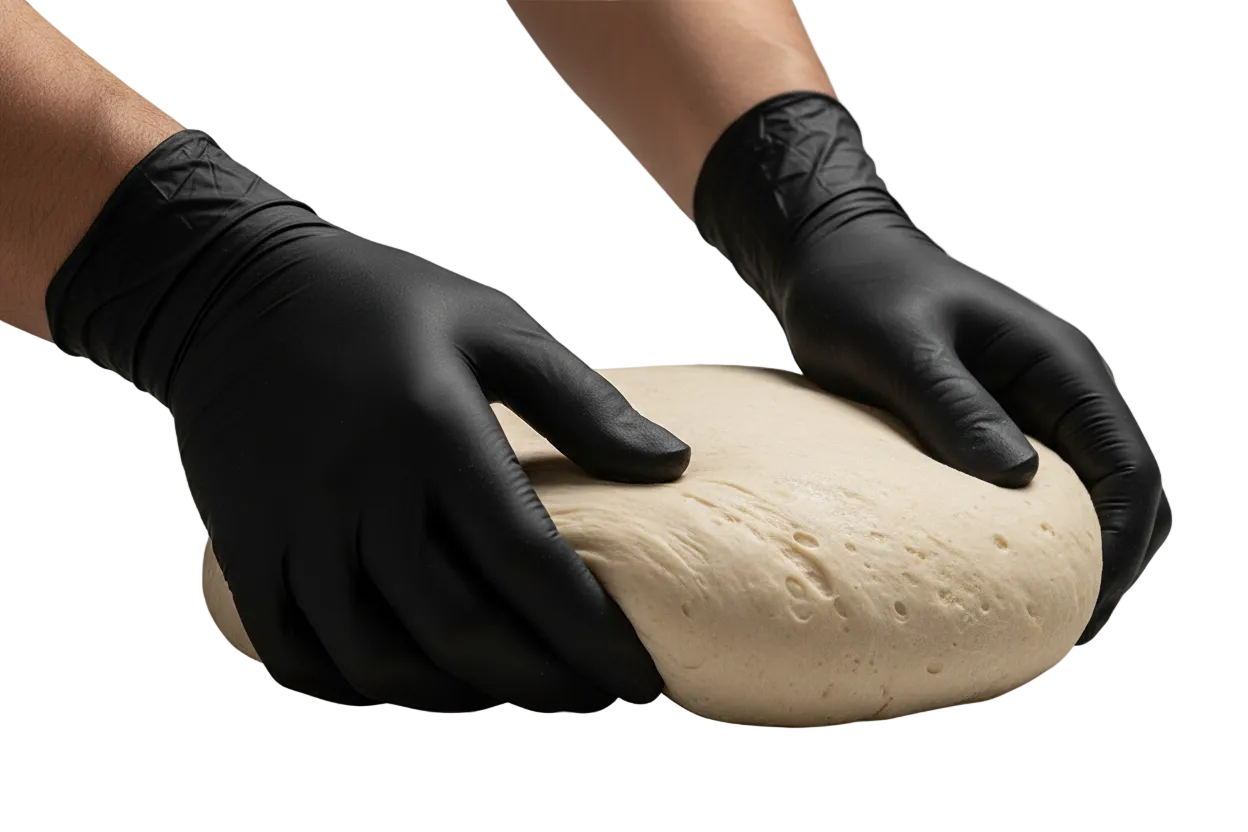
Tension changes under your hands.
Folding and shaping build structure. The dough becomes smoother, stronger, and more willing to hold its form.
Bubbles are evidence—not permission.
Air and expansion show fermentation at work, but readiness comes from several cues together, not one dramatic bubble.
Temperature changes the clock.
A warmer kitchen usually moves fermentation faster. A cooler one slows it down. The dough—not a blind timer—gets the final word.
The surface holds clues.
Volume, elasticity, jiggle, and the way the dough releases from its container help a baker judge the stage it has reached.
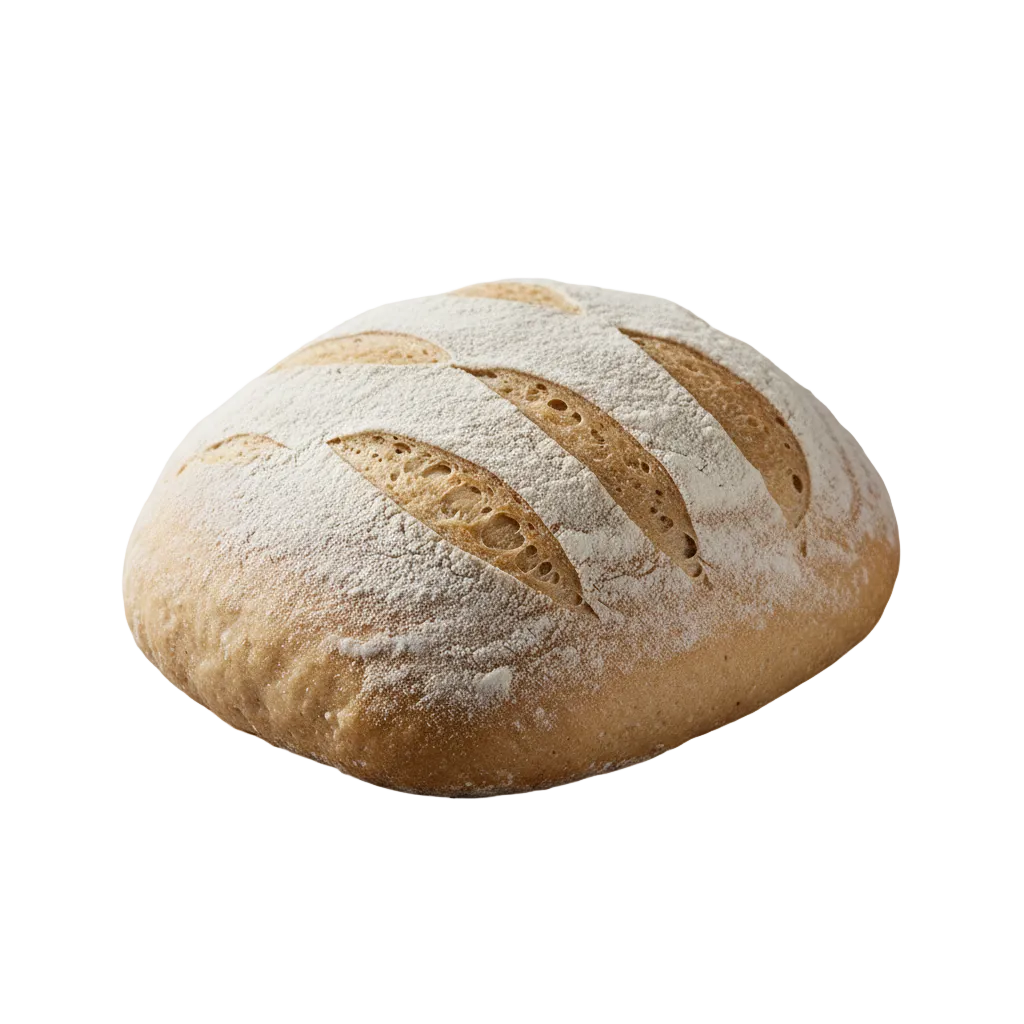
Scoring directs the opening.
The final cut creates a planned place for expansion as heat drives the loaf upward in the oven.
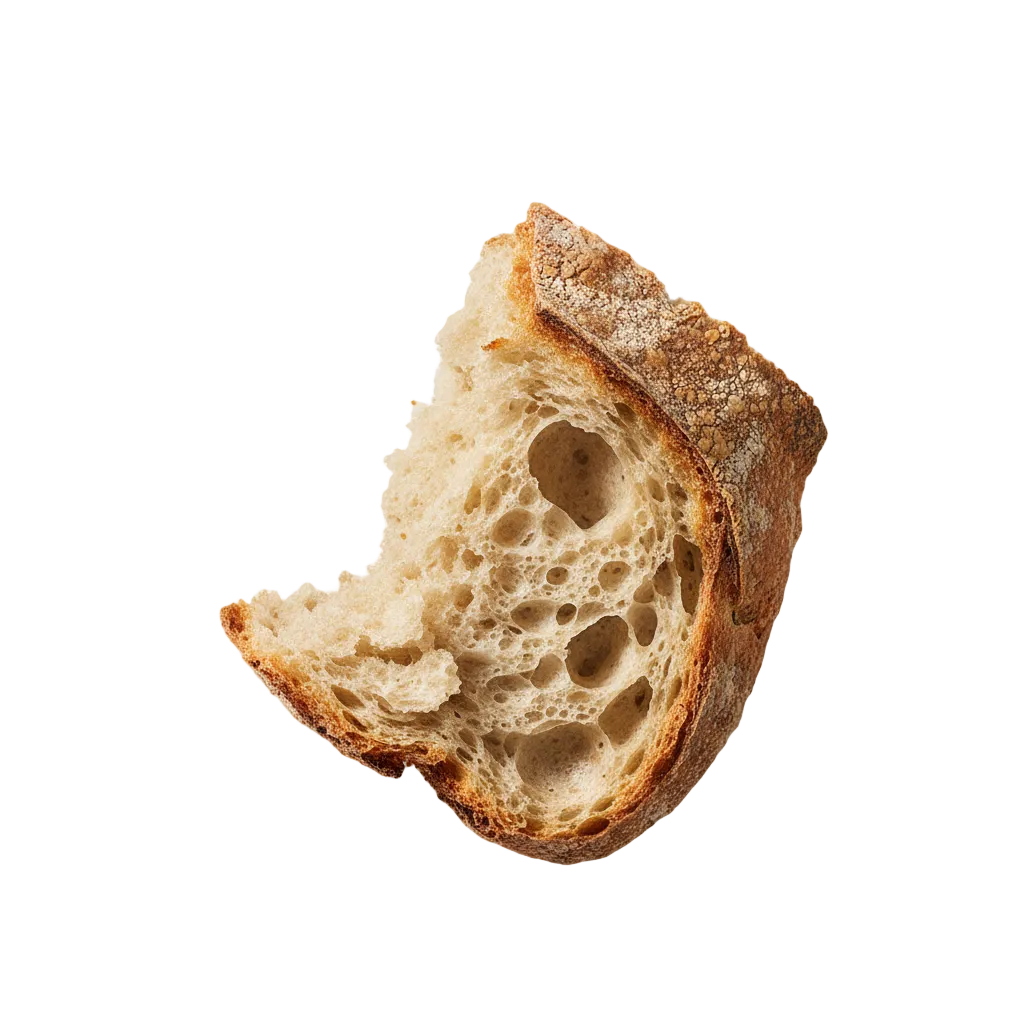
The crumb records the process.
Fermentation, hydration, shaping, temperature, and time leave evidence inside every finished loaf.

The final mark
A cut with purpose.
Before baking, the dough is scored. That cut gives the loaf somewhere to open, rise, and become itself inside the heat of the oven.
What looks decorative is also structural.
Inside the loaf
This is what patience creates.
The crumb tells the story: fermentation, hydration, shaping, temperature, and time held inside one loaf.
Soft within. Deeply caramelized outside. Familiar bread, transformed.
Beyond the loaf
Sourdough is not a loaf-only life.
A living culture is not limited to one shape. It can move through bread, pasta, pizza, pastries, and the everyday ritual of making food with more patience, curiosity, and care.
Bread is the beginning.
The familiar place to see the culture do its work: a crackling crust, an open crumb, a loaf that tells the story of its time.
It can move through a meal.
Starter can live beyond the boule—in fresh pasta, pizza dough, focaccia, crackers, pastries, and whatever a curious cook wants to learn next.
Fermentation makes room.
It slows the work down long enough for people to touch the dough, ask questions, and make something together.
Keep a little going.
Feed it. Notice it. Bake with it. Pass a portion forward. That is how a starter becomes part of a real life.
At Eat Well ABQ, sourdough is more than bread. It is a way to learn, make, gather, and keep good things moving.
Albuquerque, New Mexico
Made here. Taught here.
At Eat Well ABQ, Chef Evangalene makes and teaches sourdough in Albuquerque - at high altitude, by hand, and in a kitchen where people learn by touching the dough themselves.
Come as a customer. Leave knowing what the dough is trying to tell you.
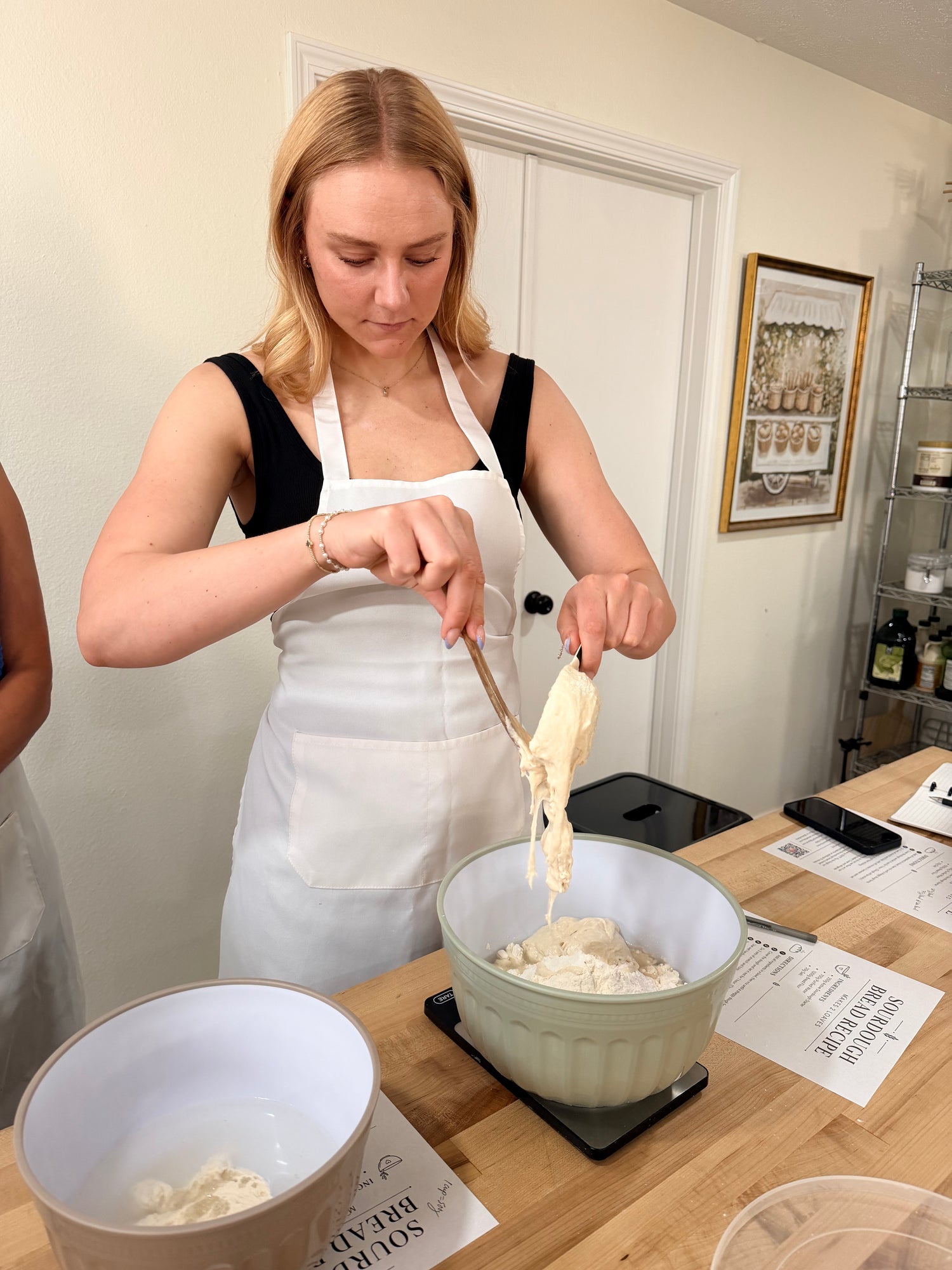
A working beginning, bread made with your own hands, and a clear path for the next bake.

Choose the next chapter
Keep following the dough.
A few things people ask
Sourdough, explained.
Sourdough is naturally fermented bread made with flour, water, salt, and a living starter instead of commercial yeast.
Flour - Water - Salt - Time
You began with flour, water, salt, and time. Now there is only one thing left to do.
Meet sourdough.
Taste it. Learn it. Make it with your own hands.
Chef Evangalene's invitation“When you’re ready, I’ll meet you in the kitchen and show you what the dough is saying.”
Some bread fills a table. Sourdough has a way of bringing people back to it.
Baked and taught by Eat Well ABQ in Albuquerque, New Mexico
Cora.Chef Evangalene's living starter
Leave a note at the table
What stayed with you?
Tell Chef Evangalene what brought you here, what you learned, or what you would love to make next. Every note goes directly to Eat Well ABQ.